![[Dividing Line Image]](div.gif)
AUSTRALIA BIRDING
& NATURE EXPEDITION
Queensland Tour Description
Australia, the “land down under”, allures birders and non-birders alike. Perhaps it is the strange creatures with strange names like platypus, koala, cassowary and chowchilla. Scientists theorize Australia separated from world’s once contiguous land mass much earlier than other continents, allowing diverse development of plants and animals. In fact, Australia boasts over 820 birds species, 4000 different kinds of fish and over 25,000 plant varieties, many of which are not found anywhere else in the world.
Or maybe we are attracted to beauty of Australia: the white-sand beaches, sparkling seas, marine reefs, blue mountains, green rainforests, lush wetlands and volcanic craters. Adding to the allure, the people of Australia offer a warm welcome to visitors. Their spoken English appeals to the ear and their words have an attractive ring. Friendly and laid back, they are often described as generous and humorous.
In a land of beauty, congenial hospitality and comfortable travel, colorful and exotic birdlife awaits us. If you have not birded Australia before, almost every bird is new to you. If you already have visited, a lot is left to see, given its 332 endemic species, 820+ total species and vast distances across the continent.
Queensland, the sunshine state and the premier state to bird in Australia, offers the best in birdlife and is readily amenable to traveling by RV.
Day 1: We will start our trip in Cairns, a coastal city in North Queensland. After checking into our hotel we will have our orientation meeting and Welcome to Australia dinner. Cairns hotel for two nights.
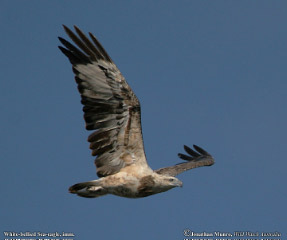
Day 2: Queensland is noted for its white-sand beaches and, of course, the Great Barrier Reef which stretches 1240 miles from Bundaberg northward. We will visit the magnificent reef, the longest in the world, by charter boat from Cairns for optional snorkeling and seabirds such as Black-naped Tern, Black Noddy, Brown Noddy and several thousand Sooty Terns. Among other possibilities are Pacific Reef-Egret and White-bellied Sea-Eagle. We will be able to land at Michaelmas Cay and Hastings Reef where seabirds nest and Lesser and Greater Frigatebirds fly overhead.
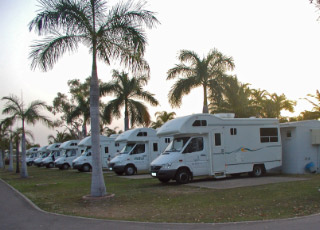
Day 3: In the morning we will pick up our RV's. We will be renting RV’s for travel, sleeping and many meals. Typically, these are late model Class C turbo diesel vehicles accommodating two to four adults and including double bed, gas stove, refrigerator, microwave, shower, toilet, air-conditioning/heating, pressurized hot & cold water and radio/CD player. Also included are linen, bedding and kitchen equipment. We will be able to drive and camp right where the birding action is best. Cairns campground for two nights. (Travel ~5 mi.).
Day 4: Our campsite is an easy walk from the best birding at the Cairns Esplanade and Cairns Botanic Gardens, where we will meet a local birding guide. The Esplanade is famously known for close-up views of up to 2000 shorebirds at high tide in the extensive tidal mudflats. Among those usually found are: Eastern Curlew, Lesser Sand Plover, Pacific Golden Plover, Greenshank, Gray-tailed Tattler, Curlew Sandpiper, Red-necked Stint, Great Knot, Broad-billed Sandpiper, Terek Sandpiper, and Sharp-tailed Sandpiper. The nearby Botanic Gardens lie in lowland tropical rainforest supporting Varied and Yellow Honeyeaters, Spangled Drongos, Yellow-bellied Sunbirds, Bar-shouldered and Peaceful Doves, and Channel-billed Cuckoos. Flocks of Pied Imperial-Pigeons fly past at dawn and dusk.
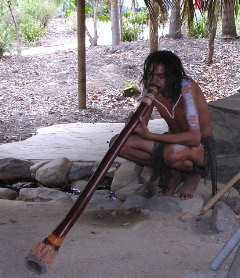
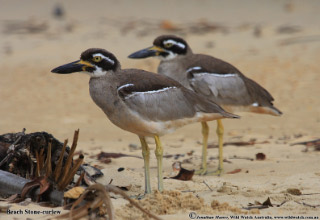
Day 5: After early morning birding at the Esplanade, we will visit Tjapukai Cultural Park and learn about aborigine culture. Then we'll drive northward along the coastal Captain Cook Highway, enjoying the scenery. Our campsite is at Wonga Beach where Double-eyed Fig-Parrots and Beach Stone-curlews occur. (Travel ~59 mi.)

Day 6: An early morning start will take us the short distance to Daintree River in time for their first cruise of the morning, which will give us opportunity to see rare species close up: Great-billed Heron, Papuan Frogmouth, Azure and Little Kingfishers, Black-necked Stork and perhaps the spring arrivals of Shining Flycatcher, Large-billed Gerygone, and Black Bittern. After birding the Daintree area we will head to our next campground at Julatten in original rainforest, an oasis in surrounding farmlands. At dusk and dawn, behind the park, Platypus paddle along Bushy Creek. In early evening we can find Eastern Barn Owl, Northern Brown Bandicoot, Long-nosed Bandicoot, Green Ring-tailed Possum and other noctornal animals. Camp at Julatten for two nights. (Travel ~37 mi.)

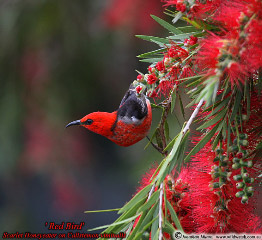
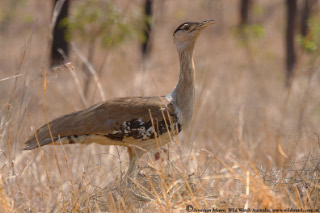
Day 7: Our local birding guide will lead us to Mount Malloy, Abattoir Swamp and Mount Carbine. Here we have found Pheasant Coucal, Red-winged Parrot, Pale Rosella, Scarlet Honeyeater, Apostlebird, and Metallic Starling. In the dry country we can find Australian Bustard, Galah, Crested and Squatter Pigeons, Red-backed Kingfisher, Brown Falcon, and Red-tailed Black-Cockatoos. Abattoir Swamp supports waterbirds including Comb-crested Jacana and Intermediate Egret.
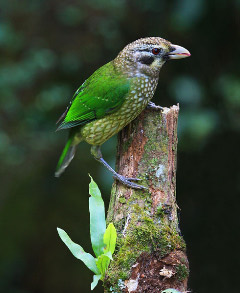
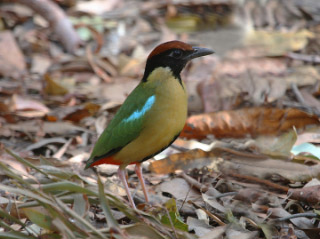
Day 8: We'll start with the excellent early morning birding around our campsite, seeking Wompoo Fruit-Doves, Noisy Pitta, Macleay's Honeyeater, Spotted Catbird, and Pied Monarch. An exciting find last tour was watching, through a spotting scope, an Australian Owlet-Nightjar rousting in a tree cavity. Our next campsite has first-class facilities, including birds such as Buff-banded Land-Rail, Australian King-Parrot, Eastern Spinebill, and Gray Shrike-Thrush. Camp at Atherton for four nights. (Travel ~55 mi.).
 Day 9: We will travel
by mini-bus with a well-known
professional birding guide to a creek for Platypus and Tree Kangaroos, and in
nearby fields find Golden-headed Cisticola and Chestnut-breasted Manikins. At
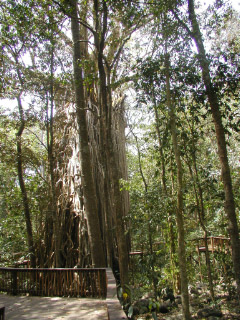
Curtain Fig Tree,
where Yellow-breasted Boatbills can be seen from the boardwalk around the huge
strangler fig tree, we can also see Topknot Pigeon,
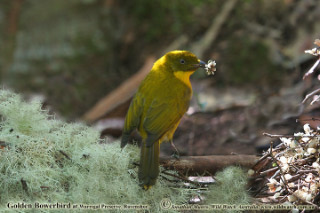
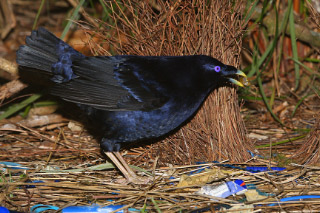
Bower's Shrike-Thrush, and Long-billed Scrubwren. We will visit Golden Bowerbird and Satin Bowerbird bowers. At Hasties Swamp we can
watch for Plumed Whistling-Ducks, Spotted Harrier, and Sarus Cranes. Lunch can be at a dairy,
cheese and chocolate factory where you can see Mistletoebirds from the dining
room window. A visit to the enormous man-made
Lake Tinarro can get us Black-fronted Dotterel, Little Shrike-Thrush, and
Red-backed Fairywren. Near the dam are White-throated Honeyeater, Scarlet
Honeyeater, and Yellow
Honeyeater attracted to the flowering eucalypts.
Day 9: We will travel
by mini-bus with a well-known
professional birding guide to a creek for Platypus and Tree Kangaroos, and in
nearby fields find Golden-headed Cisticola and Chestnut-breasted Manikins. At
Curtain Fig Tree,
where Yellow-breasted Boatbills can be seen from the boardwalk around the huge
strangler fig tree, we can also see Topknot Pigeon,
Bower's Shrike-Thrush, and Long-billed Scrubwren. We will visit Golden Bowerbird and Satin Bowerbird bowers. At Hasties Swamp we can
watch for Plumed Whistling-Ducks, Spotted Harrier, and Sarus Cranes. Lunch can be at a dairy,
cheese and chocolate factory where you can see Mistletoebirds from the dining
room window. A visit to the enormous man-made
Lake Tinarro can get us Black-fronted Dotterel, Little Shrike-Thrush, and
Red-backed Fairywren. Near the dam are White-throated Honeyeater, Scarlet
Honeyeater, and Yellow
Honeyeater attracted to the flowering eucalypts.
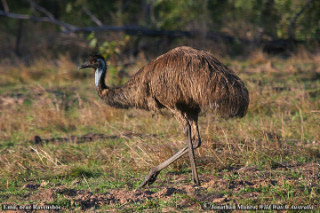
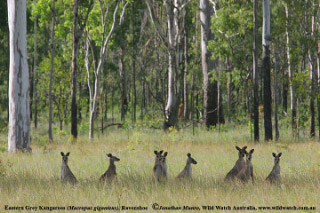
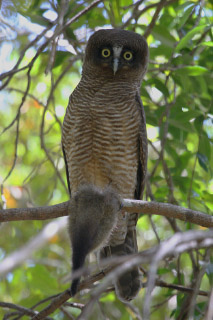
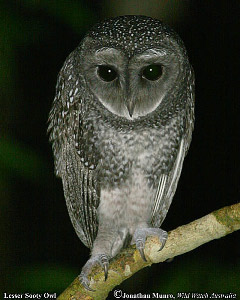

Day 10: Again birding with our excellent local guide, we will be take a large circuit in the blue gum (sclerophyll) woodlands at Green Valley, Dagarty, and Tumoulin that eventually leads to Ravenshoe and beyond. Birds of the day likely could include Cotton Pygmy-Goose, Brolga, Brown Cuckoo-Dove, White-throated Treecreeper, Mountain Thornbill, and Jacky Winter. In the late afternoon, driving through savannah woodlands we could see Emus and many Eastern Gray Kangaroos, as well as Common Wallaroo, Pretty-face Walabies and Whiptail Wallabies. At night we will spotlight on a private tract seeking rainforest possums such as Lemuroid Ring-tailed Possum, Herbert River Ring-tailed Possum and Coppery Brush-tailed Possum. On our return trip we can drive the quiet roads near Ravenshoe, seeking Rufous Owl and Masked Owl, using our guide to aid in the search.
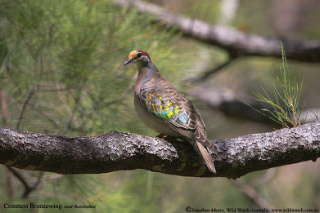
Day 11: This catch-up day will allow our local guide to show us recent rarities and visit other Atherton Tablelands birding hotspots. The rainforests of Queensland yield a disproportionately high number of endemic birds, many localized to the areas we will travel. Visiting Granite Gorge in the dry country we are in range for Great Bowerbird, Tawny Frogmouth, Varied Sitella, and Weebill, and amongst the huge boulders are numerous Mareeba Rock Wallabies. Gray-crowned Babbler and Common Bronzewing also are found in drier parts. Along Tinaroo Creek Road we can find Black Bittern, Blue-winged Kookaburra, and Silver-crowned Friarbird.
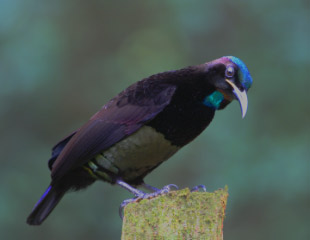
Day 12: We'll continue birding to our next campsite, stopping at Lake Eacham and Lake Barrine in Crater Lake National Park. Common rainforest species of the lake area are Fig Parrot, White-throated Treecreeper, Gray-headed Robin, and Victoria's Riflebird. The Tablelands is a World Heritage Site known as the Wet Tropics. Atop a high volcanic plateau rising to over 3200 feet, we bird in the dark, cool rainforests supporting localized Australian endemics such as Tooth-billed Catbird, Lovely Fairy-wren, Fernwren, and Chowchilla. Camp near Mission Beach. (Travel ~76 mi.).
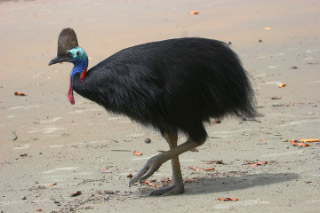
Day 13: We'll bird the Mission Beach area along the coast where the primary target is Southern Cassowary, a threatened species whose numbers have dropped precipitously owing to introduced predators, auto collisions, and destruction of rain forests through storms and clearing. Camp at Ingham. (Travel ~93 mi.).
Day 14: A visit to Tyto Wetlands will get us Crimson Finch, Red-backed Fairywren, Green Pygmy-Goose, Rufous-throated Honeyeater, and dozens of Agile Wallabies. Camp at Crystal Creek. (Travel ~25 mi.).
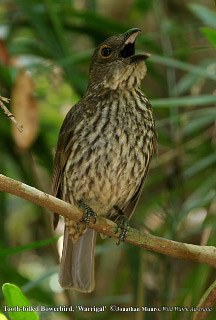
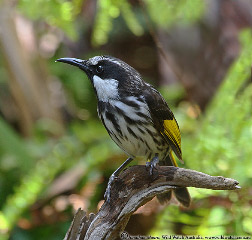
Day 15: High in coastal mountains in the Paluma Range we should find Eastern Whipbird, Tooth-billed Bowerbird, White-cheeked Honeyeater, Brown Gerygone, Chowchilla, Bassian Thrush, and Victoria's Riflebird. Camp at Townsville. (Travel ~44 mi.)
Day 16: The wetlands at Townsville Common Environmental Park is the place to see Royal Spoonbill, Pacific Baza, Bush Stone-Curlew, Latham's Snipe, Eastern Koel, Rainbow Bee-eater, and White-naped Honeyeaters. Next we will stop at the Billabong Sanctuary for the thrill of being close up and personal with Australian animals and learn of the plight of Koalas, Wombats and other environmentally threatened species. We will be camping at a nearby billabong where Plumed Whistling-Duck, Green Pygmy-Goose, and Comb-crested Jacana are common. (Travel ~29 mi.)
Day 17: After a bit of early morning birding, we will take an early start to Cape Hillsborough National Park. Camp two nights. (Travel ~219 mi.).
Day 18: A day to relax on the beach or bird the forested peninsula. We can look for Beach Thick-knee, Mangrove Honeyeater, Superb Fruit-Dove, Rose-crowned Fruit-Dove, and nesting Brahminy Kites.
Day 19: Most of the day will be spent driving south on Bruce Highway. We are now traveling through southern Queensland, not from from the coast. At our campsite we can check for birds at Boyne River, where Whistling Kites and Black Kites are common. (Travel ~316 mi.)
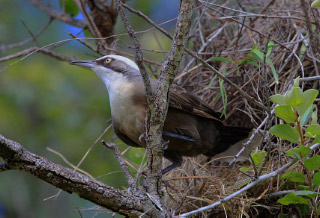
Day 20: Another travel day, although a couple of hours shorter, we will have plenty of time to visit a city park where last trip we found Little Corella, Double-barred Finch, Gray-headed Babbler, Australian Grebe and dozens more. Camp for two nights at Tin Can Bay on Queenland's Sunshine Coast. (Travel ~207 mi.)
Day 21: Your choice today, bird at Cooloola National Park for Brown Quail, Black-breasted Button-quail, Grey Butcherbird, Little Wattlebird, and Eastern Curlew, or take an optional (extra cost) tour of Frazier Island, one of the few places in Australia where Dingo still exist without interbreeding with domestic dog.
Day 22: A short distance from our campsite is a place where dolphins come in for a friendly handout of fish and they have been doing so for over 50 years since the rescue of the oldest one. Our next campsite is in Lockyer Valley for two nights. (Travel ~95 mi.).
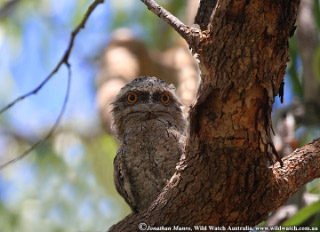
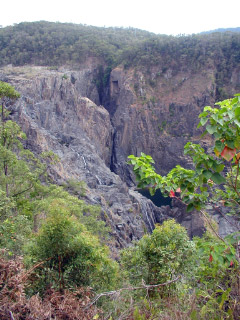 Day
23: Birding the countryside not far from camp, we can find Gray Teal,
Hardhead, Bluebill, Pink-eared Duck, Banded Lapwing, Red-rumped Parrot, Tawny
Frogmouth, Tawny Grassbird, Zebra Finch, Yellow-rumped Thornbill, and many
more.
Day
23: Birding the countryside not far from camp, we can find Gray Teal,
Hardhead, Bluebill, Pink-eared Duck, Banded Lapwing, Red-rumped Parrot, Tawny
Frogmouth, Tawny Grassbird, Zebra Finch, Yellow-rumped Thornbill, and many
more.
Day 24: We head into the city of Brisbane and in spite of the urban setting, our campsite is surrounded by an impressive bird population, notably Little Pied Cormorant, Australian White Ibis, Dusky Moorhen, Brown Cuckoo-Dove, Crested Pigeon, and Pied Butcherbird. Some may wish to head to Brisbane Forest Park for Powerful Owl, Regent Bowerbird and Wompoo Pigeon. Camping in Brisbane. (Travel ~50 mi.).
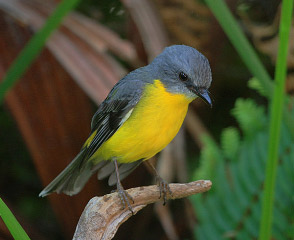
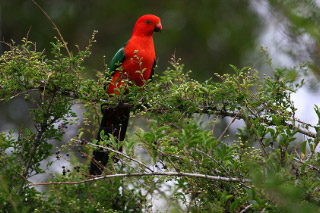
Day 25: We return our RV's in the morning and ride a chartered van to Lamington National Park, arriving in time for afternoon tea and checking into our mountain villas at O'Reilly's where we will spend three nights. One of the first birds likely to greet us is Australian King-Parrot. Eastern Yellow Robins are common in the wooded areas.
Day 26: A large 205 sq. km park, Lamington straddles a 3600-ft. escarpment in subtropical and temperate rainforests, and is considered one of the best birding sites in Australia. We are guests at O'Reilly's and will be able to see shy forest birds, such as Regent Bowerbird and Satin Bowerbird, coming to feeding trays throughout the grounds and at night see Mountain Brushtail Possums, Red-necked Pandemelons and Sugar Gliders visit the spotlight-illuminated feeders.
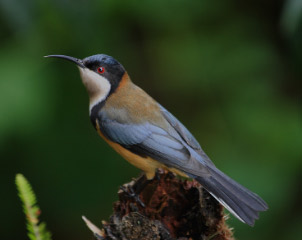
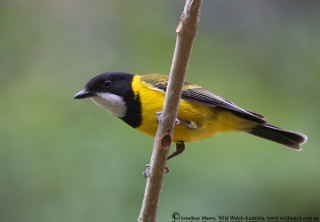
Day 27: On forest trails and more open dry eucalypt woodland beyond O'Reilly's are more treasured finds: Albert's Lyrebird, Rufous Scrub-bird, Glossy Black-Cockatoo, Eastern Bristlebird, Rose Robin, Golden Whistler, and many more. On our last night at O'Reilly's we'll celebrate our Farewell Dinner.
Day 30: Transport to Brisbane airport for return flights or, if continuing with the Tasmania tour, to Hobart.
Bird photos copyright © Jonathan Munro, Wild Watch Australia, www.wildwatch.com.au.
To receive notice on pricing and further details, send an e-mail to Bert Frenz and he will send you notice when the website is updated or other details are available.
SPECIAL: This is an exclusive caravan, limited to only seven RV's (plus one or two extras to allow for later cancellations) and a third the size of most caravans. Based on customer surveys we are restricting the size of our group. This gives the distinct advantage of easier caravan travel and parking, and more flexibility on side trips and accommodations at great birding spots not available to traditional caravan sizes. Greater attention from the birding guides, the social directors and the staff significantly enhances the value of this specialized caravan trip.